
073. Uzbek pilaf (recipe)
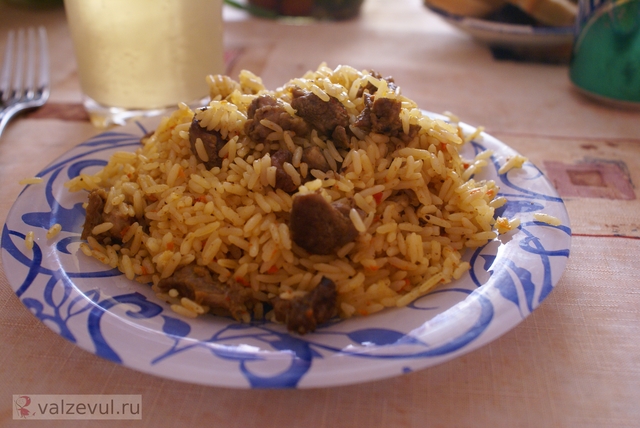
"If I have to die, let it be from pilaf"
Uzbek proverb.
They say that when Alexander the Great was conquering the world, he was greatly annoyed at having to stop three times a day and cook. So he thought and thought, and announced that he needed a dish that would be both filling (eat once — not hungry all day) and simple to cook. That's how pilaf came about.
Why am I telling you this? I'd long wanted to learn to cook real Uzbek pilaf: with lamb, all sorts of spices and in a kazan. But I wanted a proven recipe, and I had no kazan. Then recently Artem @izdato posted on his blog a recipe for exactly that kind of pilaf.
Did I manage to cook it? Details under the cut!
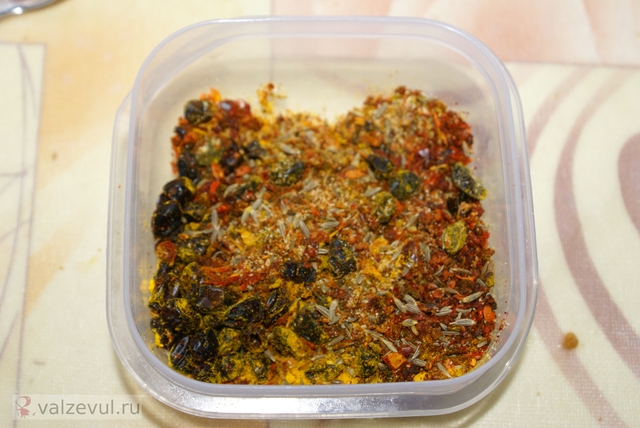
Let me point out straight away that I never did get a kazan — I cooked in a roasting pot. But I don't think that had much effect on the result. And another thing: when I was dictating what I needed to the Uzbek selling spices at the market, he looked thoughtfully at the bag of lamb in my hands, asked "Making pilaf?" and mixed me something in a paper cone. So I'll list the spices I found out about — I think you can always ask any spice seller to put a blend together for you ;).
This is what the spices look like:
Cooking time ≈ 1.5 hours.
Ingredients:
- 500 g lamb (leg meat)
- 350 g rice (ideally basmati, but I took ordinary)
- carrots
- 2 onions
- spice mix: barberry, dried garlic, turmeric, cumin, saffron, hot pepper, meat seasoning, paprika
First cut the meat into pieces, grate the carrots coarsely and chop the onions.
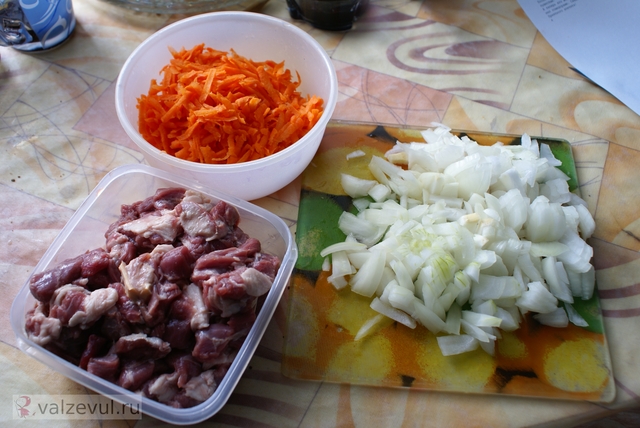
Put the lamb into a heated kazan with sunflower oil, add the carrots, onions and spices.
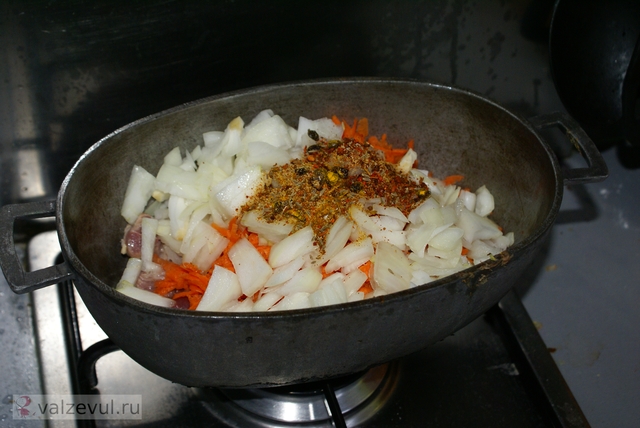
Fry all this over a high heat for about ten minutes, stirring, then turn the heat down, cover and stew for another fifteen minutes.
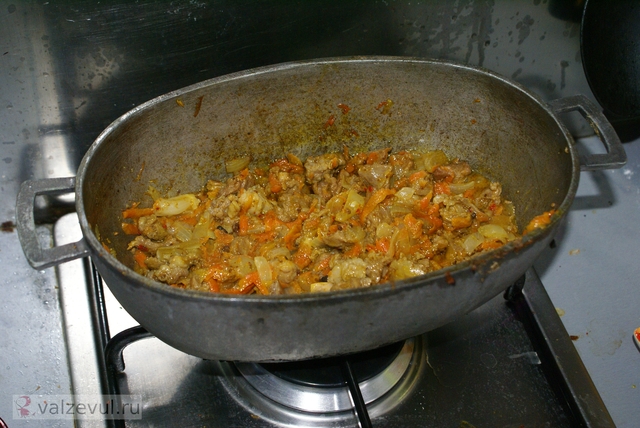
Add the rice to the kazan. If you took basmati, rinse it first until the water runs clear. Ordinary rice needn't be rinsed.
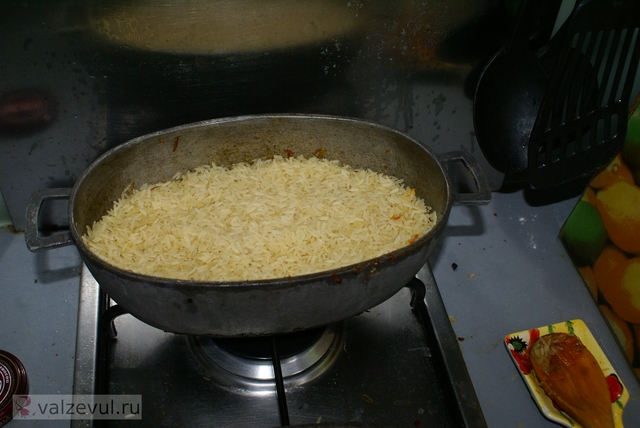
Add water, salt and boil over a high heat until the water has almost completely boiled away. Don't stir or cover!
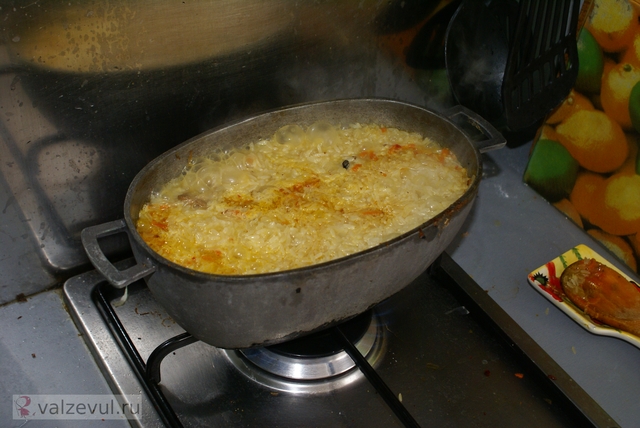
Now add a bay leaf, cover and keep on a low heat for ten minutes.
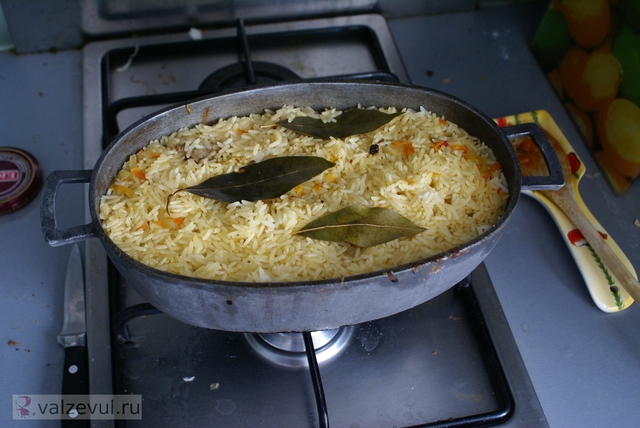
Take off the heat and leave for another ten minutes or so for the pilaf to "come to readiness" under the lid. Then stir it thoroughly. It's best eaten straight away, hot, served with pickled or fresh vegetables and washed down with tea. Don't eat it with bread — real Uzbek pilaf is eaten without bread.
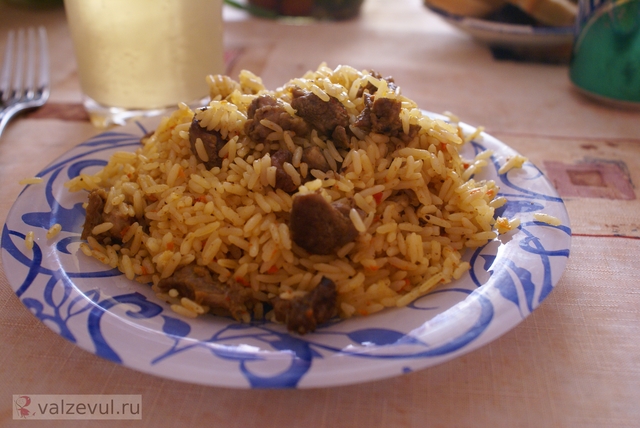
Bon appétit!