
138. About jamón and jamoneras (Spain #1)
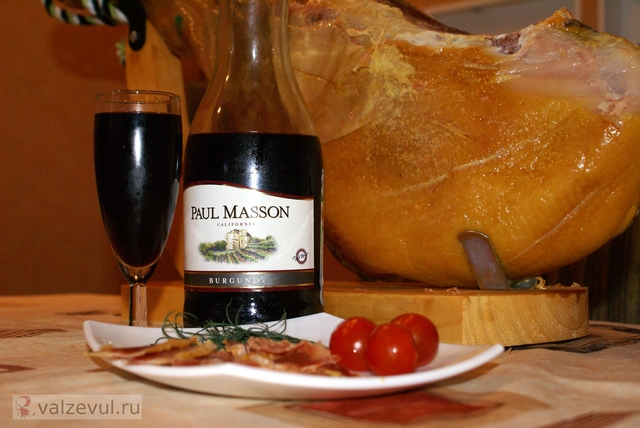
I got back from Spain not long ago, so today I'm starting a series of posts about this beautiful country. In the first one you'll find out what a jamonera is, take a virtual tour of the oldest market in Europe and learn to make Spain's most famous delicacy — jamón with melon. Those who can't wait to see other photos (unedited so far) can look in on my blog in English.
If you ever happen to be in Spain — walk into any bar and look up at the ceiling. Most likely you'll see huge pork legs, one of which — the one already started — is fixed in a special stand (a jamonera) on the bar. That is jamón (Spanish jamon — ham), a dry-cured ham that the Spanish eat with everything from strawberries to fried eggs.
There are two main kinds of jamón: jamón serrano (Spanish jamon serrano, "mountain jamón") and the usually more expensive jamón ibérico (Spanish jamon ibérico, often called "pata negra" — "black leg"). They differ in how and how long they are cured, and the most important difference between jamón serrano and jamón ibérico is the breed of pig and its diet. You can tell them apart by the colour of the trotter: serrano has a white one, ibérico a black one. The pigs used for the most expensive kinds of ibérico, Bellota for example, are fed exclusively on acorns, which is why the price can reach two hundred euros a kilo.
In search of proper jamón I went to Barcelona. On this city's main boulevard — La Rambla — is the entrance to one of the oldest markets in Europe. The first mentions of the Boqueria (Catalan Mercat de la Boqueria) date back to 1217!
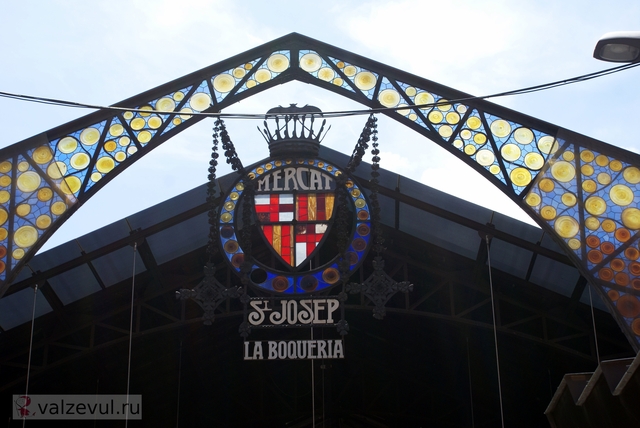
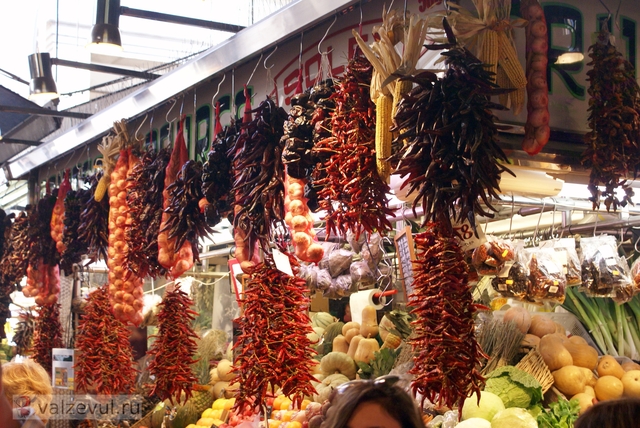
Tourists from all over the world come here not only for fresh seafood and exotic fruit, but for the riot of colour and smell.
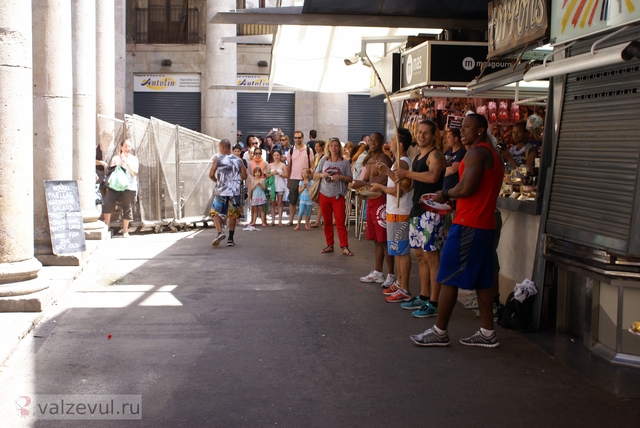
In the lanes between the stalls you can meet anyone at all — capoeiristas, for instance.
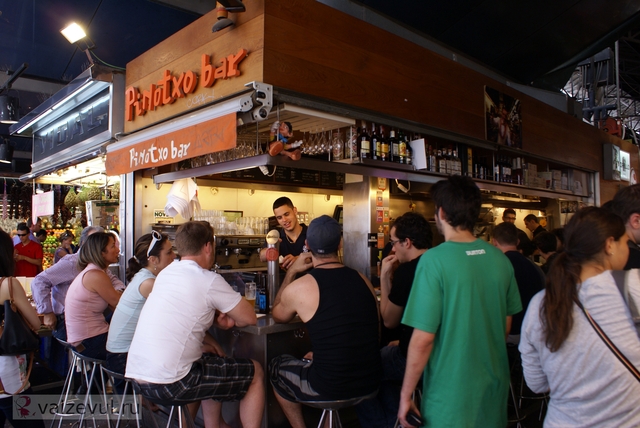
And right by the entrance it's worth having a bite at a cult spot — the Pinotxo bar, whose owner has stood behind the counter for over fifty years and become famous the world over.
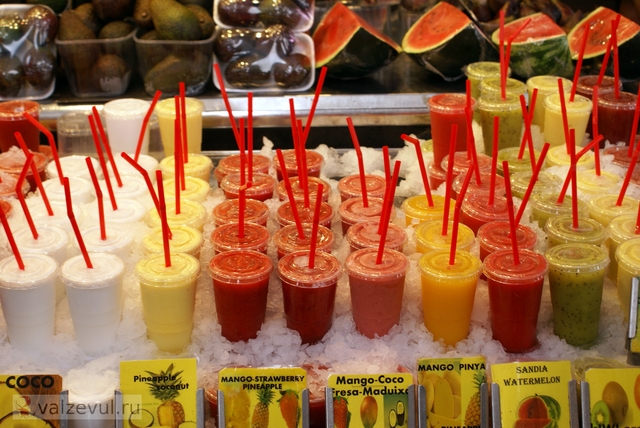
Everywhere you can buy a drink that is very popular in Spain — frozen juice (granizados). By the entrance a cup costs two euros, deeper into the market only one.
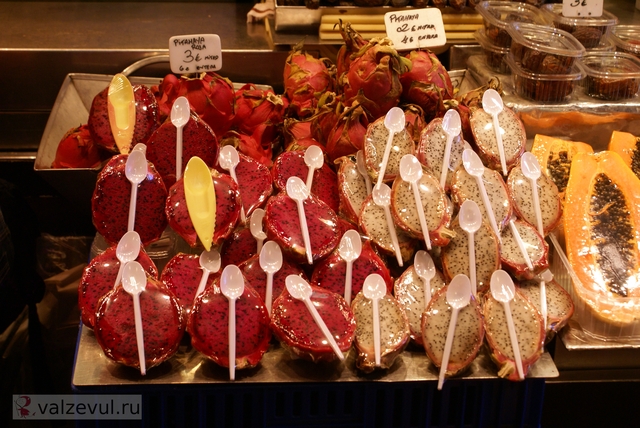
Most tourists walk around the market not to shop but to take photos. That doesn't stop them enjoying fresh fruit, which is sold already cut up and with a spoon.
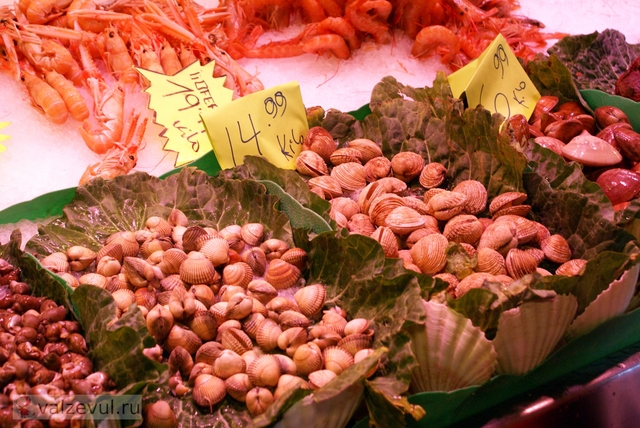
Another distinctive feature of the Boqueria is the fresh seafood, which can be cooked in front of you.
And jamón, of course. The enormous variety of salted legs boggles the mind!
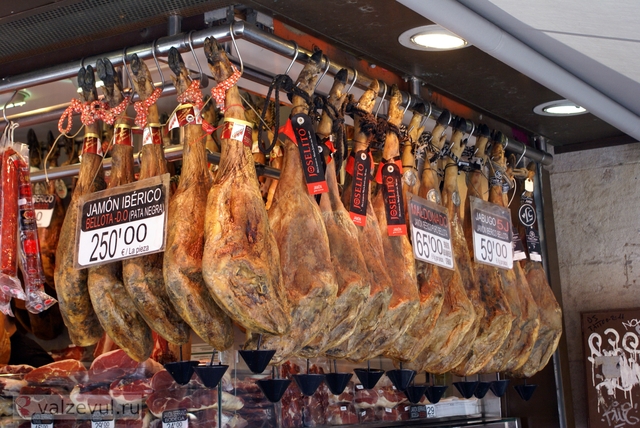
I brought an eight-kilo pork leg back from Spain. It will keep at room temperature for quite a long time, holding on to all its flavour.
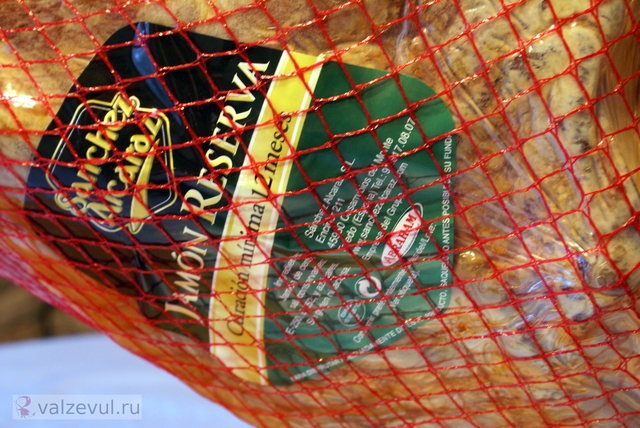
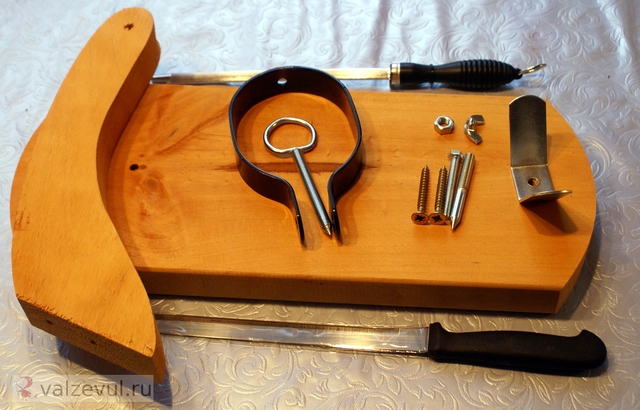
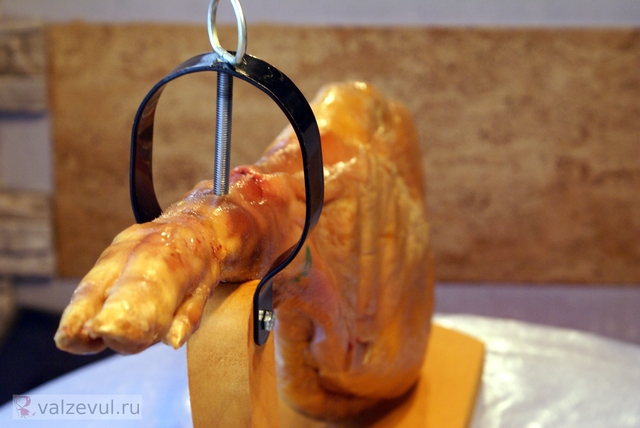
Along with a special stand (a jamonera), of course, which holds the heavy, awkward leg at two points, and a knife for slicing thinly. You should cut off exactly as much as you're going to eat straight away, after which it's best to cover the cut with a layer of fat so it doesn't dry out. Iberian jamón can only be cut properly, that is very thinly, with a special knife made of a particular steel — narrow, long and very sharp. Cut correctly, the thinnest slices of jamón should melt in your mouth like a good melon. The stand goes together like a construction kit and is ready to use straight away.
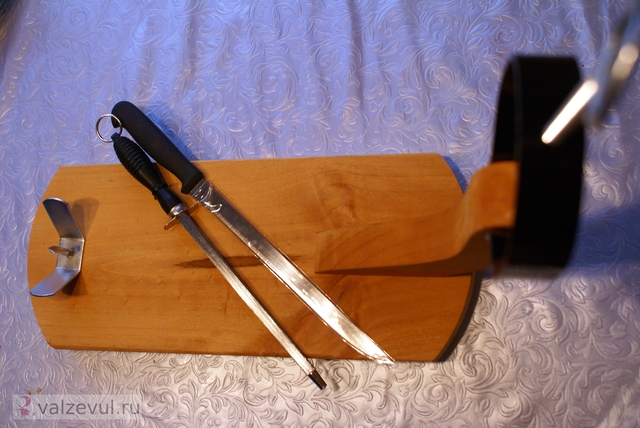
The jamón itself is fixed in the jamonera with two rods that hold the leg in balance.
Jamón is always part of the set of typically Spanish snacks called "tapas", which are offered in small portions in every bar and restaurant. This meat delicacy goes wonderfully without any side dishes or additions, except perhaps olives or tomatoes. Jamón is eaten with your hands and not put on bread — a jamón sandwich immediately shows that you're a foreigner :).
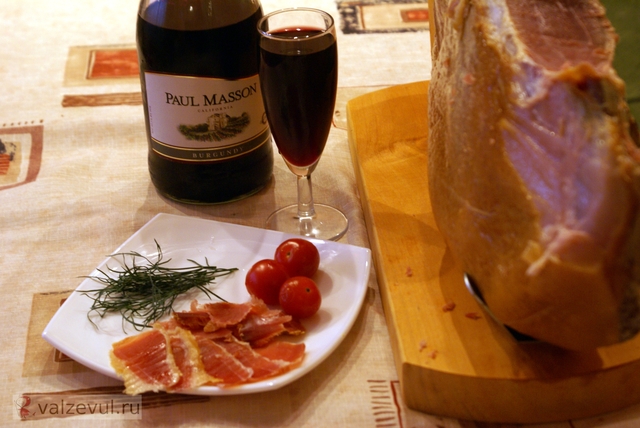
One of the Spanish delicacies — jamón with melon — is made just as simply: the melon is just cut into slices and served together with the jamón before the main courses. Besides snacks, an enormous number of hot dishes are made with jamón: it's braised with mushrooms and seafood and added to salads. But that's for next time ;).