
098. Zur-balish (Tatar recipe)
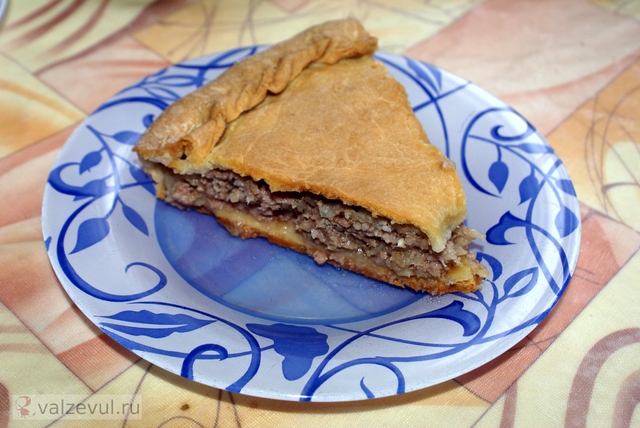
I've already introduced you to dishes of Udmurt and Swedish cuisine. Time for something new, so today I'll tell you how to make a Tatar meat pie with a very juicy filling. The dish counts as one of the most traditional and has many variants and subtleties that depend on the holiday the balish is made for, the meat it's made from and so on. Some say zur-balish is a bit like our kurnik.
Under the cut you'll find the recipe, photos of the process and a reminder of how to eat "shulpaly it balishe" properly.
Let me say straight away that mine wasn't made exactly to the classic recipe. The main difference was minced meat instead of finely diced meat (and that isn't great). So the recipe includes notes for those who want to do everything the traditional way.
Cooking time ≈ 5 hours.
Ingredients:
- 600 g beef shin
- 1.5 kg potatoes (to taste: if you want more meat, allow for it)
- 1 glass of beef stock
- 1 glass of sour cream
- 2 onions
- 8 tbsp ghee (clarified butter)
- 2 glasses of wheat flour
- 2 bay leaves
- 1/2 tsp slaked soda
- salt, ground black pepper to taste
If you like, add cumin to the filling (it gives a piquant taste) and other herbs (parsley, dill, etc.).
First make the dough. Mix most of the flour with the salt, then with the melted butter, add the sour cream, mix, add the soda and the rest of the flour, knead until smooth for 5 minutes, cover with film and set aside for an hour.
While the dough rests under the film, make the filling. Cut the meat and potatoes into pea-sized cubes (5–7 mm), peel and finely chop the onion, mix everything, salt and pepper.
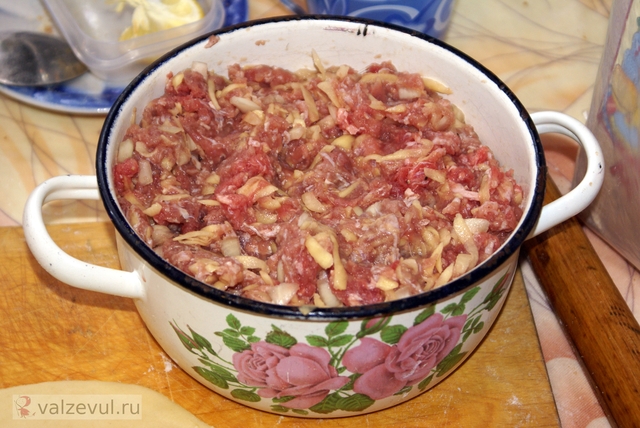
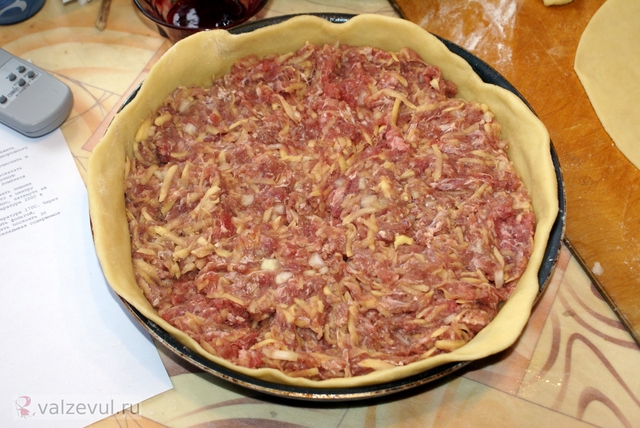
Divide the dough into 2 parts, one slightly smaller than the other. Roll out the larger part to 4–5 mm, lay it in a greased cast-iron pan, put in the bay leaves, the filling on top and a few slivers of ghee.
Roll out the second piece of dough a little thinner, cover the filling, trim the excess dough, pinch the edges of the bottom and top sheets together, tucking the dough towards the centre of the balish. Cut a hole the size of a quail's egg in the centre with a knife and plug it with a slightly larger ball of dough. Bake in the oven at 200°C for 20 minutes, until golden.
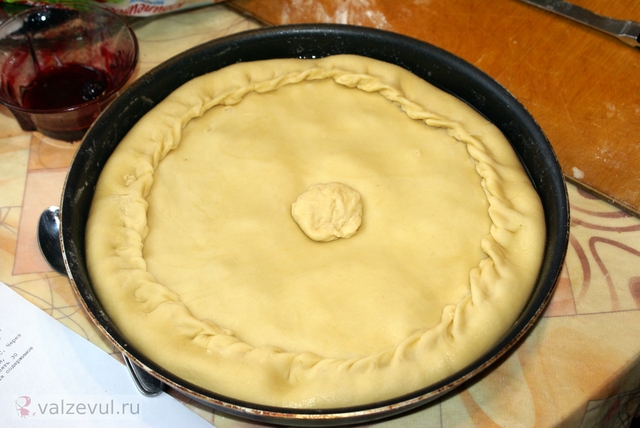
Cover with foil (or a lid) and bake for another 40 minutes at 170°C. Pour hot stock in through the hole, plug it with the ball, cover with foil again and bake for 2.5 hours at 150°C. Turn off the oven and let it stand for 30 minutes.

So, the balish is ready. Now the important part of the "ritual": how to eat it. For this we do a barbaric thing: cut the lid of the balish round the edge and lift it off. Cut it into pieces on a separate plate and give everyone a plate so they can help themselves to filling. The walls and bottom of the balish, freed of filling and soaked with stock, are cut up too — they and the top disc are eaten instead of bread with the stock and filling. So in this case the balish pie serves both as bread and as the dish in which the main course — meat with potatoes and onion, covered in stock — was stewing.
If you suspect you won't manage a "zur-balish" (i.e. "big") in one go, make an "urta-balish" (i.e. "medium"). Remember that a reheated balish no longer counts as balish.
Though to be honest I didn't fuss over such subtleties.
Bon appétit!