
162. Marbled beef steak (recipe)
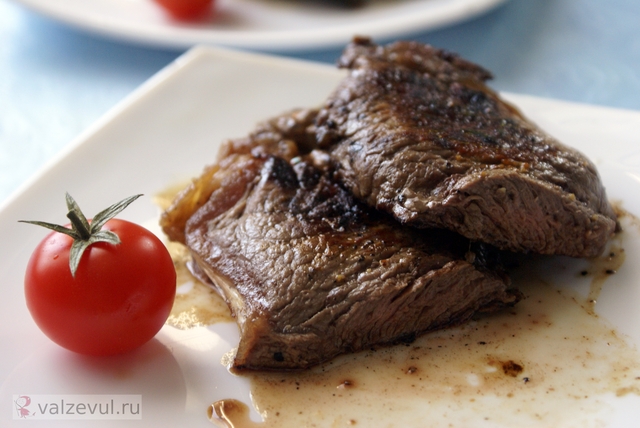
I've already cooked pork or lamb ribs; now it's the turn of beef tenderloin. Below you'll find not only the classic recipe for marbled beef steak, but also a number of tips that make cooking this seemingly straightforward dish easier. Photos and the recipe are under the cut.
Cooking time ≈ 15 minutes
Servings: 2
Ingredients:
- salt, pepper
- olive oil
- beef tenderloin (more about it below)
Steaks are made only from fresh beef. And the taste of a steak changes with the thickness of the piece and the part of the carcass it was cut from. There are several main kinds of steak:
- Rib steak — cut from the sub-scapular part of the carcass, it has a lot of veins of fat.
- Club steak — cut from the back, from the thick edge of the longest muscle of the back; it has a small rib bone.
- T-bone steak (a steak on a T-shaped bone) — cut from the part of the carcass on the border between the back and the loin, in the area of the thin edge of the longest muscle of the back and the thin edge of the tenderloin, so it consists of two kinds of steak meat at once — filet mignon on one side and the bone on the other.
- Porterhouse steak — cut from the loin, in the area of the thick edge of the tenderloin.
- Striploin steak — cut from the loin, in the area of the head of the tenderloin.
- Round rump steak — cut from the top piece of the hip.
- Filet mignon — a thin cross-cut of the central part of the tenderloin, the most tender and lean meat; it is never served "rare".
- Chateaubriand — the thick edge of the central part of the beef tenderloin (it can be fried whole or portioned, most often for two). Essentially the same as a large filet mignon, but this steak is served lying lengthways on the plate rather than standing.
- Tournedos — small pieces from the thin edge of the central part of the tenderloin (used for making medallions).
- Skirt steak — not the most tender, but a very tasty piece of meat from the flank.
A properly cooked steak will be tasty in any case, so choose the meat according to your own preferences. I, for instance, am going to make a classic striploin steak.
To start with, the meat needs to be rinsed, brought to room temperature and wiped dry. If water is left on the surface of the tenderloin, it will evaporate during cooking, cool the surface of the steak, and the meat will end up braised rather than fried.
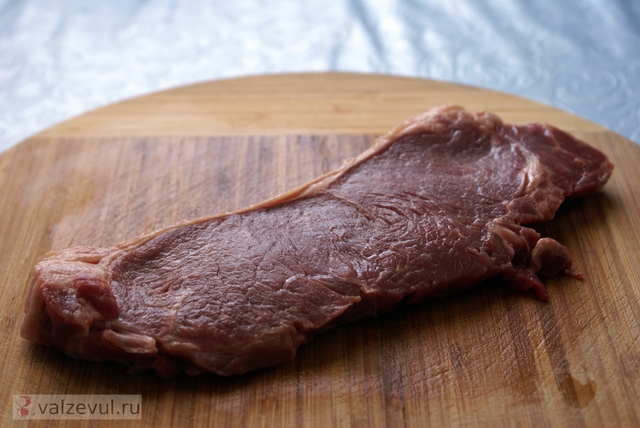
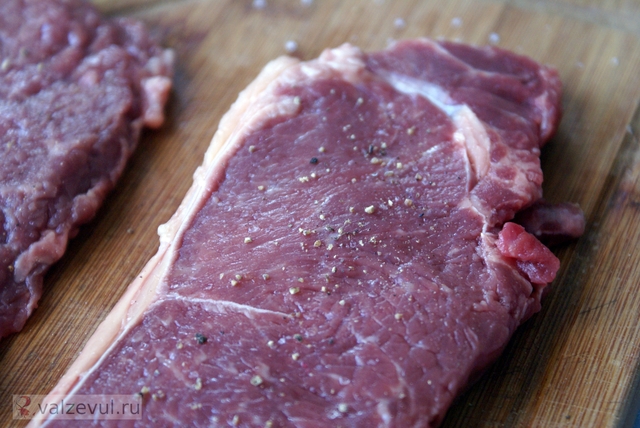
Then the steak is rubbed with coarse sea salt and pepper. If you like you can add herbs or marinate it in lemon juice beforehand, but that's a matter of taste — the original steak recipe has nothing of the kind. It's worth brushing the meat with olive oil straight away rather than heating the oil in the pan — that way there won't be too much of it.
The time you fry the steak for also depends on your taste. There are seven degrees of doneness, but if you leave out the most extreme ones (blue and too well done), these remain:
- Rare – seared on the outside, red inside (meat temperature 39°–43°)
- Medium rare – a steak with blood, red-pink inside (meat temperature 42°–47°)
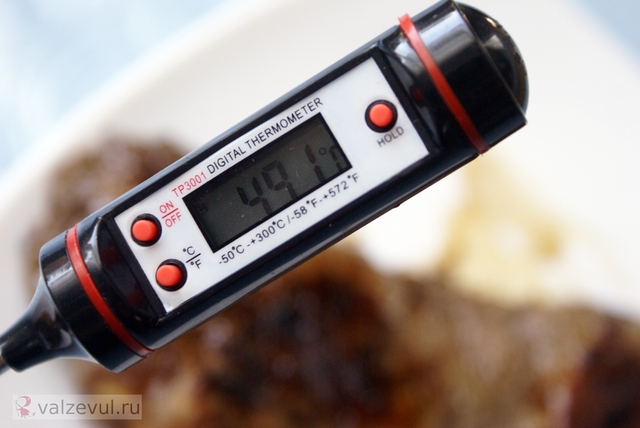
- Medium – a medium-cooked steak, pink inside (meat temperature 47°–50°)
- Medium well – an almost fully cooked steak, light pink inside (meat temperature 55°–57°)
- Well done – a fully cooked steak (meat temperature > 60°)
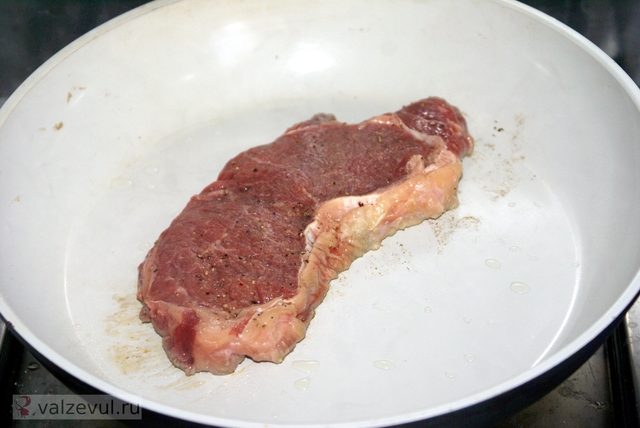
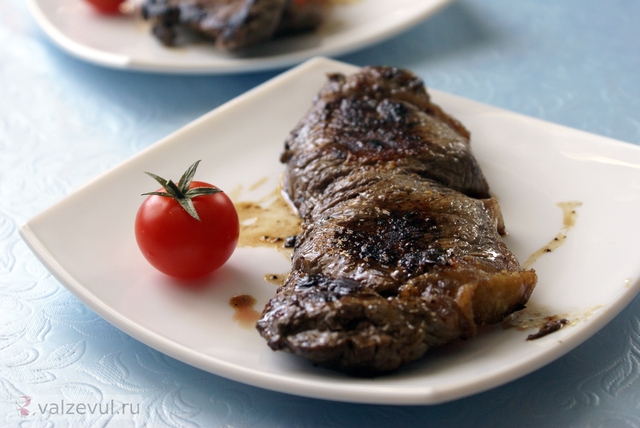
I prefer Medium, and for it I fry the meat for three minutes on each side in a very hot pan. Note that the meat has to be turned very carefully — so the juices don't run out.
Once the meat has been fried, it's worth covering it with foil and letting it "rest" for 3–4 minutes (for Medium). The temperature inside is still high, so only this way will the whole piece become warm, juicy and tender. Here's what the thermometer read at the moment it went into the foil.
Steaks should be served straight away and on warmed plates.
Bon appétit!